
Nursery Setups | A Montessori Educational Nursery Design for Saudi Asma Nursery
MooTon, a professional nursery setups supplier, delivered a Montessori-based design for Saudi Arabia’s Asma Nursery.
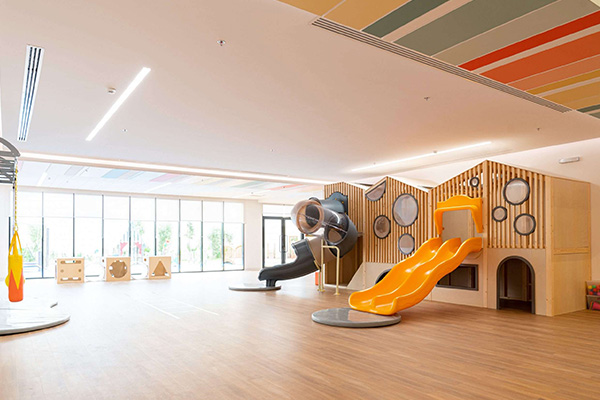
In recent years, as Saudi Arabia advances its "Vision 2030," educational reform has become a national priority. Traditional enclosed classrooms can no longer meet the developmental needs of a new generation of children. In response to the Belt and Road Initiative, MooTon, as a professional nursery setups supplier, is injecting new vitality into Saudi Arabia's early childhood education — helping to create open, natural, and inspiring spaces for children's growth.
For the Asma Nursery in Saudi Arabia, MooTon drew inspiration from the desert oasis, positioning the nursery as an "educational oasis" that shields children from the hustle and bustle of the city. Grounded in the Montessori philosophy, we restructure spaces through natural and play-based design, supporting children in building deep connections with nature, their community, and themselves through independent exploration.
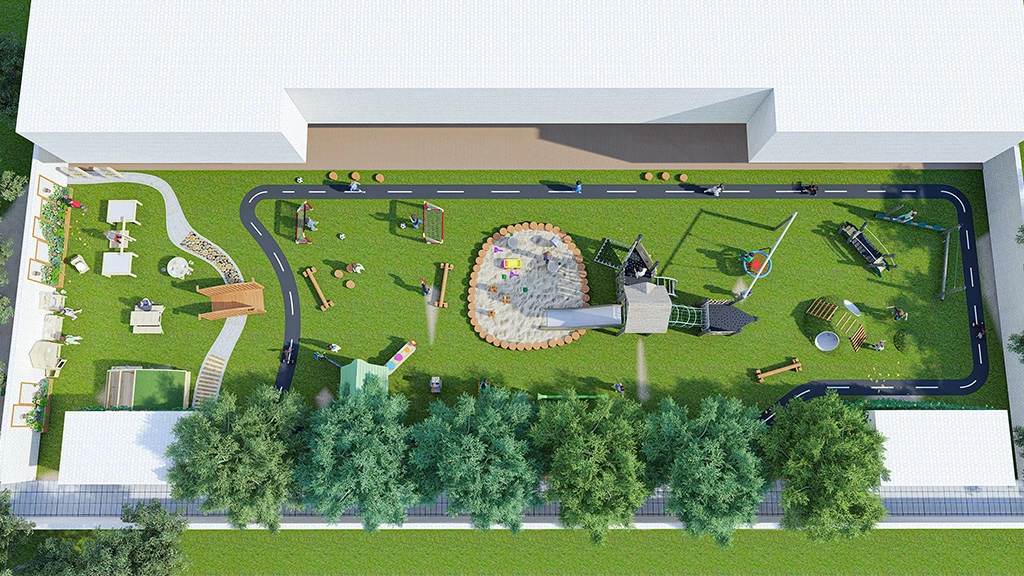
MooTon has divided the outdoor space into three well-defined functional zones with well-designed nursery setups: Social Experience Corners (role-play area, art area), Nature Discovery Loop (wooden hut, sandpit, music hut), and Movement Development Belt (balance bridge, micro-terrain, crawl tunnel). Each zone is designed around the Montessori principle of respecting children's natural instincts.These nursery setups encourage children to choose their own activities freely.
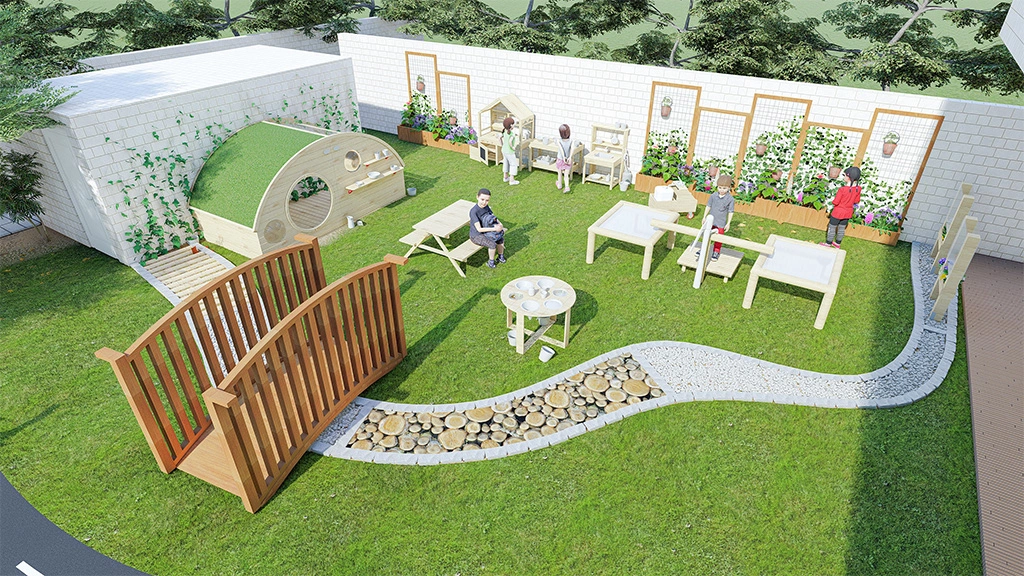
Social Experience Corners
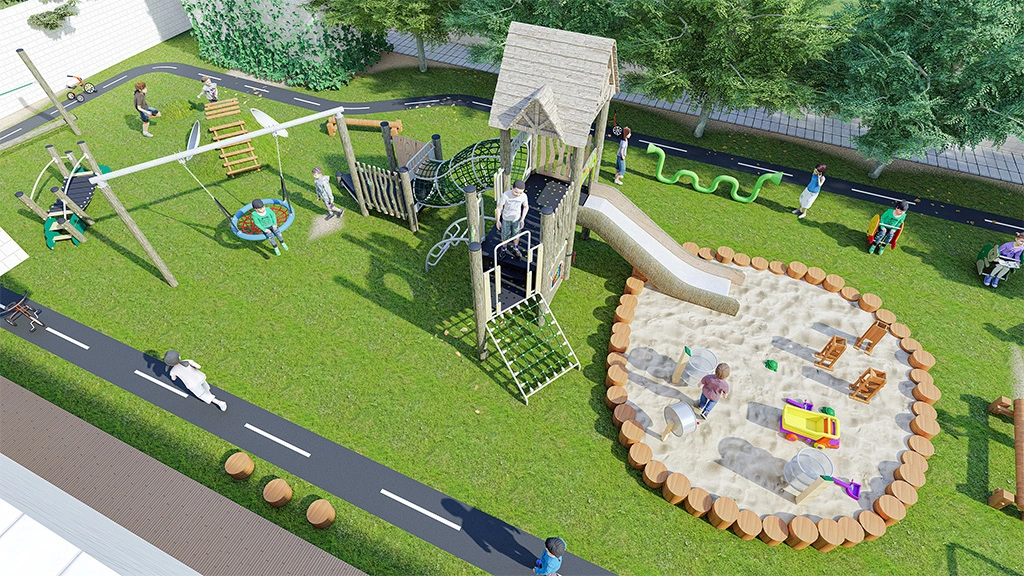
Nature Discovery Loop
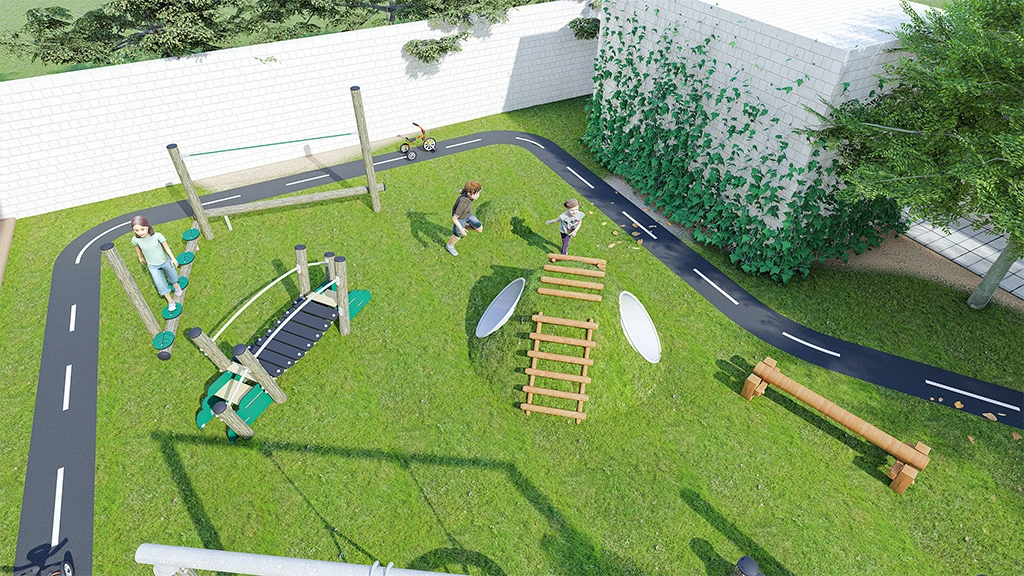
Movement Development Belt
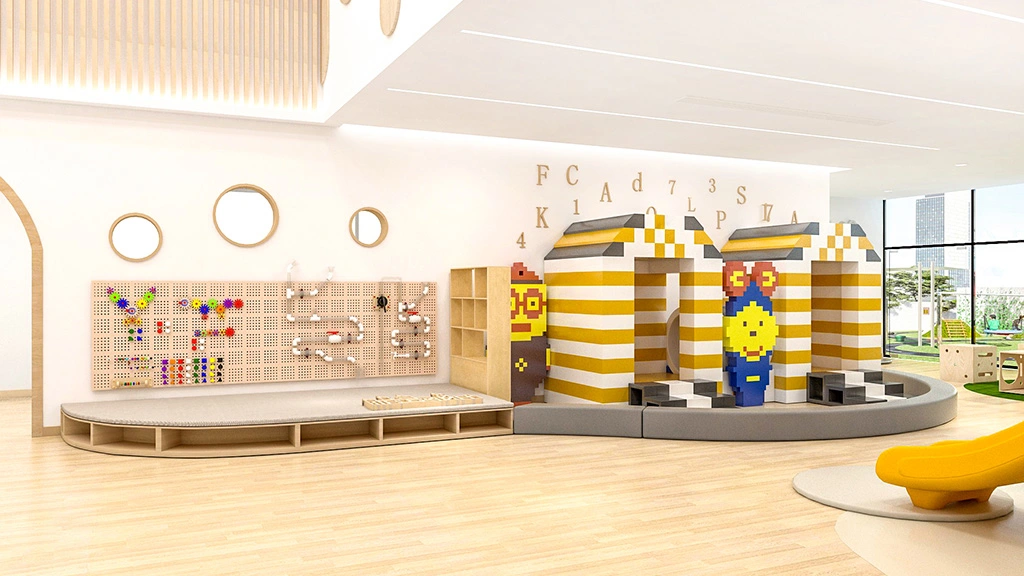
In specific design features, MooTon emphasizes a sense of challenge and autonomy. For instance, next to the climbing wall, a "Challenge Progress Chart" is installed. Each time a child completes a climb, they place a star sticker — symbolizing courage — on the corresponding difficulty level, gaining a sense of achievement. Inside, open storage units allow children to freely access blocks, picture books, and even reconfigure the function of a space — such as turning it into a small library or observation station — according to their interests.
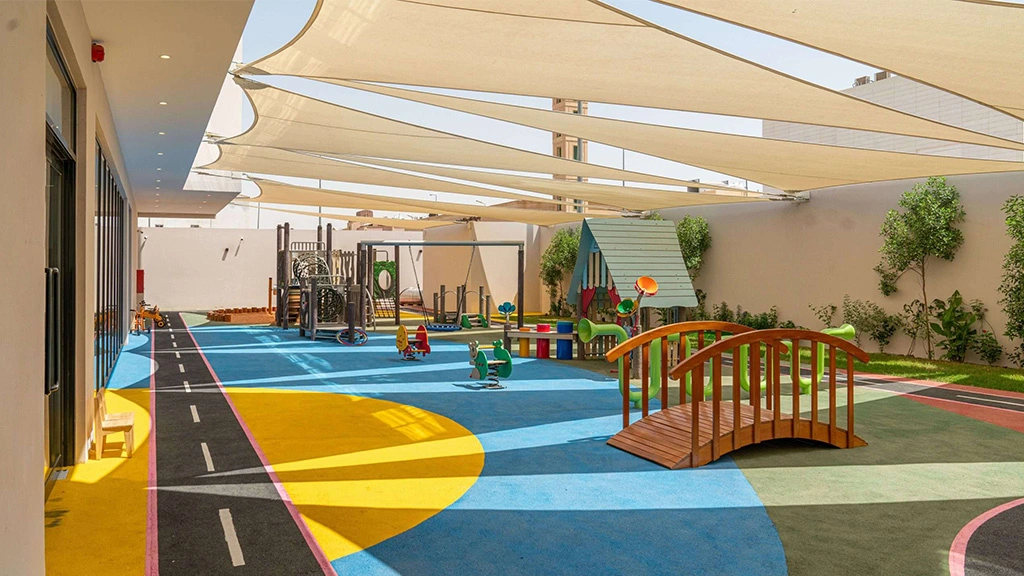
To make the outdoor space usable and comfortable throughout the day, MooTon designed an adjustable shading system and ventilation corridors, creating a "dynamic order" along the timeline. In the morning, it becomes a cool reading corner; at noon, a shaded, breezy rest area; in the evening, a small theater for watching the sunset. The space "transforms" with the time of day, always adapting to children's changing needs.
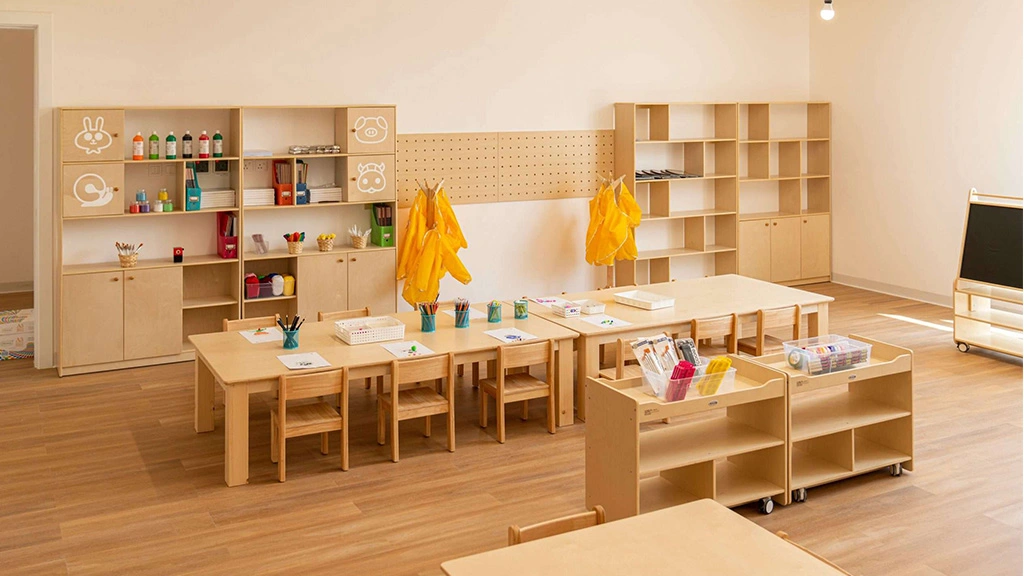
In line with natural playground design principles, MooTon strictly follows the Montessori preference for simplicity, rejecting the "over-decoration" common in traditional kindergartens. We turn "blank interfaces" — such as walls — into children's "spaces of self-expression." Using magnetic display systems, children's drawings, handmade works, and observation notes can be mounted on the wall at any time, forming a fluid and ever-changing "gallery of growth."
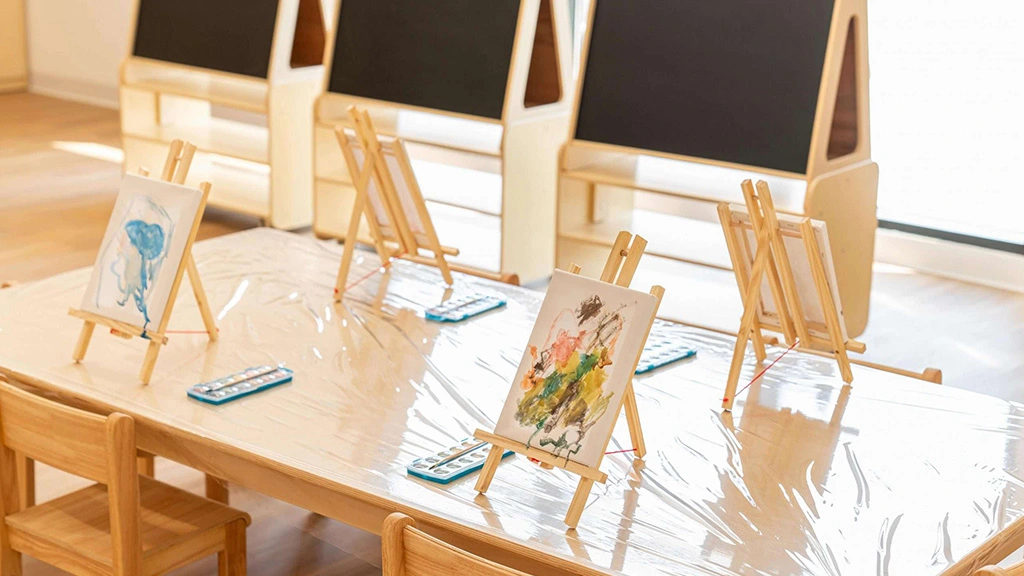
In material selection, MooTon adheres to a "minimal processing" principle. From the realistic texture of treated pine to the gravel of the micro-terrain, every material is chosen to feel natural and authentic. The natural wear of the wooden treehouse and the small footprints left on the sandpit edge become evidence of a "living" environment. This respect for the authenticity of materials echoes the Montessori goal of "helping children establish a direct connection with nature."
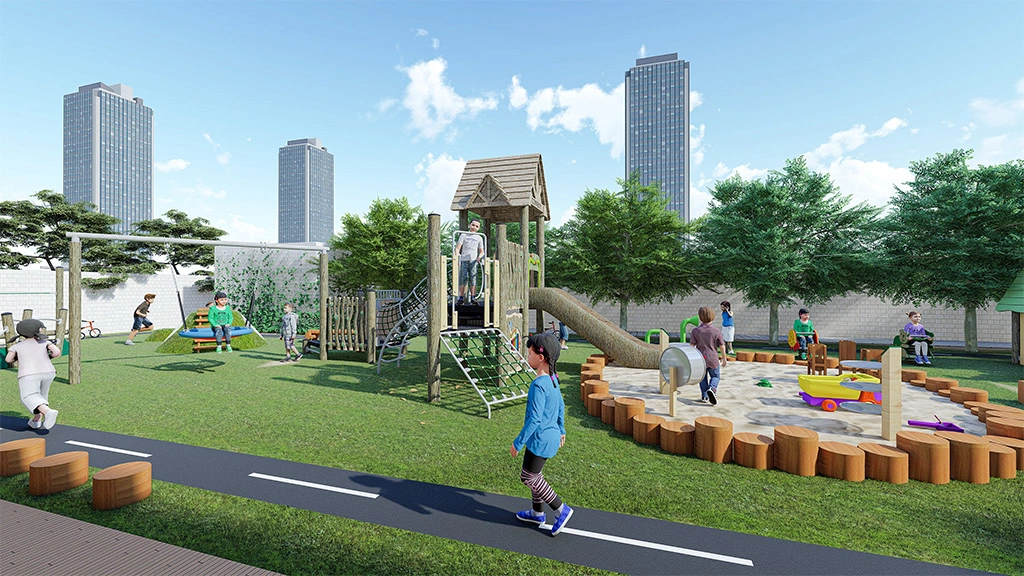
MooTon has always followed the design philosophy of "global concepts, local implementation." In the Asma Nursery project, we transformed local Islamic geometric patterns into design elements for sensory materials, seamlessly integrating the Montessori framework with local culture. This model of "core concept + local innovation" has now been successfully applied in children's space projects across more than thirty countries.
MooTon is more than just a nursery setups supplier. We are dedicated to building a childhood haven where every child can explore freely and grow happily.